
If you’ve spent any time looking into van conversions, you’ve probably heard the term “core build” thrown around. But what does it actually mean, and why does it matter?
At Roost Vans, the core build is the first step in any van building journey. I always describe it like a sheet-rocked house. The wiring is behind the walls, the windows are in, the paneling is on. There are no cabinets, no bed, no plumbing yet. It’s a built-out shell that’s been intelligently engineered to already know where those things are going to go. So when you’re ready to take that next step, the van is ready for you.

What’s Actually Included
A core build covers a lot of ground. Here’s what we typically do at Roost Vans:
Smooth Rail Mounting System: All of our vans start here, and everything after the core build mounts to this flexible robust system. A bit of up front work pays dividends in quality and speed of the main build later. Don’t build a van without it. Trust us.
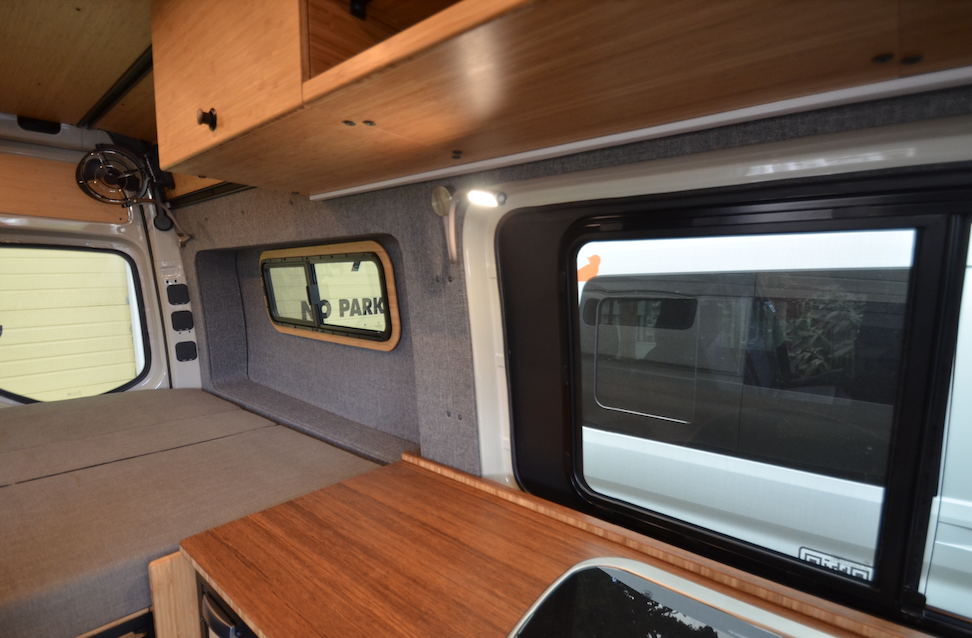
Windows, Vent fan and Seating. We primarily work with AM Auto glue-in style windows, and for good reason. We’ve had far better luck with longevity and no leaking compared to clamp-in styles. Pill windows are a popular option for the back half of vans, especially if you’re planning a bed system and want airflow while you sleep.
And depending on how far you want to go, we also typically install a vent fan, a heater, pull tested seating, and any add-ons that make sense for your situation before continuing onto the electrical.
Electrical. A standardized core wiring system goes in with a switch plate and power panel for power distribution that can be integrated well with a power station. The wiring is behind the walls before the paneling goes up, so everything is clean and ready to expand.
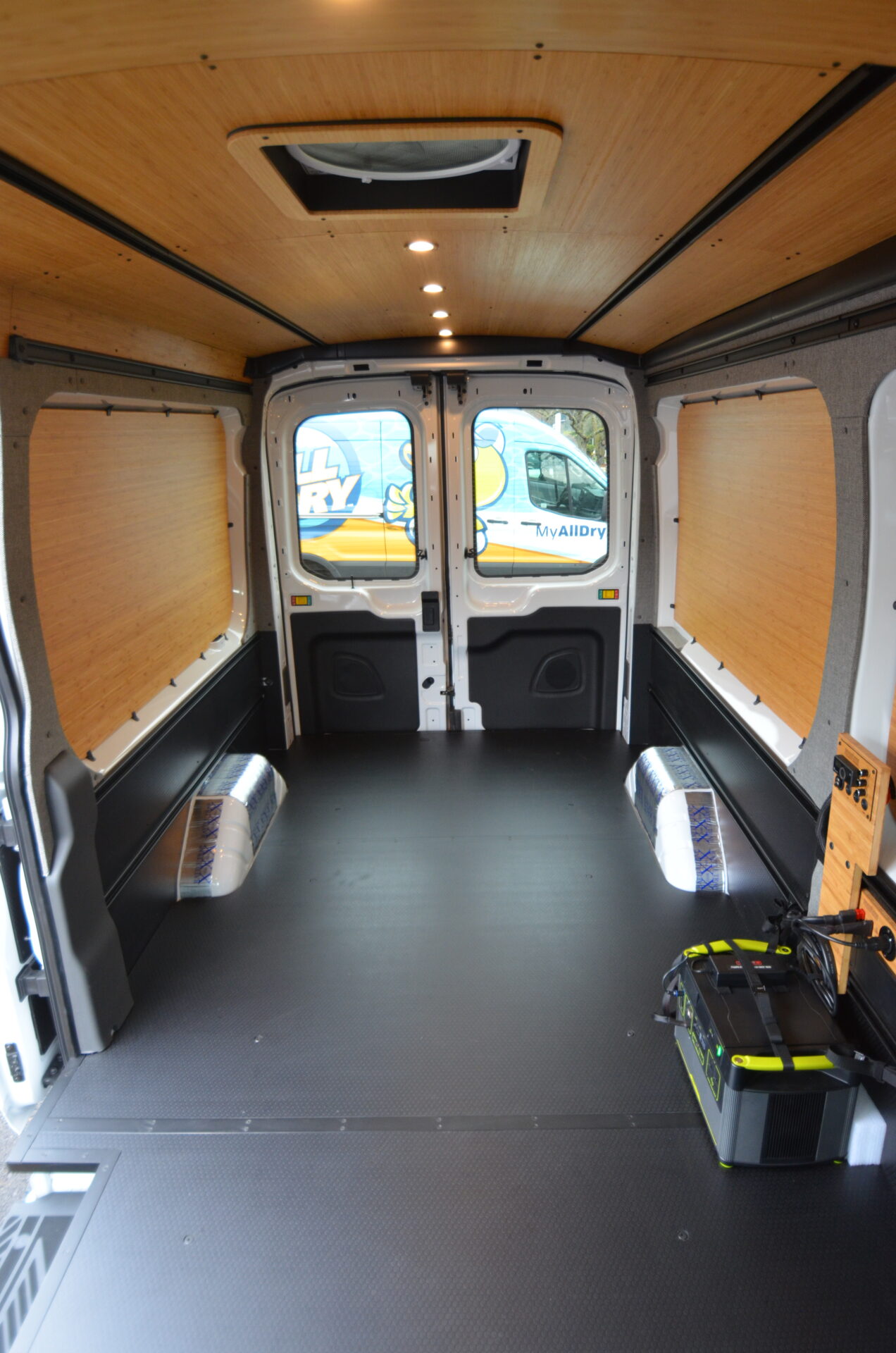
Insulation and sound suppression. When vans roll off the factory floor, you can barely hold a conversation inside them while they’re moving. That changes after a core build. We use Rattle Trap on key areas to kill the drum effect of the metal, and then we layer in Thinsulate wherever we can get it. Behind the headliner, in the ceiling pockets, behind the doors. It makes a significant difference both thermally and acoustically. We don’t over-engineer it chasing diminishing returns with 100% coverage, but what we do is targeted and effective.
Paneling. We primarily use bamboo, and it’s a material we’re genuinely proud of. Finished in Osmo hard wax, it’s easy to maintain and refinish. No outgassing and lasts for years and years. Unlike laminate. Paneling is also available as unfinished baltic birch, or fabric-wrapped. The upper, mid, and lower wall paneling all integrate directly with our smooth rail mounting system, and everything is serviceable, meaning you can pull a panel without dismantling your whole build.
Flooring. We use a half-inch hex ply anti-skid flooring material, screwed into rivnuts so the floor stays serviceable if you ever need to get under it. It comes as a DIY-shippable kit, or we’ll install it in the shop.
Why It’s Built Around the Smooth Rail System
Everything in the core build is designed around our interior Smooth Rail Mounting System. It’s what makes the whole thing flexible. When you have a vehicle traveling down the highway at 75 mph, you want every component locked in securely. But you also want the ability to move things around, swap out components, or add to the build later. The rail system makes all of that possible without pulling apart the whole van.
The Phased Build Approach
One of the biggest reasons people choose Roost Vans for their core build is budget flexibility and not being 100% sure on how exactly they want their van built. Maybe you don’t know exactly how you want to use your van yet. Maybe you want to live in it for a few months before committing to a full buildout. A core build lets you drive a functional, quiet, insulated van while you figure that out.
Customers come back to us two, three, sometimes four times to add onto their build. Others get everything done at once. Either way works, and the core build is engineered to support both paths.
Some people have us do the core build in the shop, then handle everything after that themselves, using Roost products or other aftermarket components they’ve chosen. That’s a perfectly valid way to do it, and one of the unique strengths of our system.
Can You Do It Yourself?
Yes. We offer the electrical system, the mounting system, the paneling, the flooring kit, and support for insulation, vent fans, and windows as DIY products. Some customers have us come in for the pieces they don’t want to tackle, like window installation or electrical, and then handle the rest on their own. There’s a lot of flexibility there.
The Bottom Line
The core build is not the flashy part of a van conversion. It’s not the cabinetry or the countertops or the rooftop deck. But it is the reason everything else works as well as it does. A well-done core build means your van is quiet, insulated, wired, paneled, and ready for whatever comes next.
We do core builds here in our Portland, Oregon shop, and we also support builders all over the country and internationally through our product ecosystem. However you want to approach your build, it starts with Roost Vans.